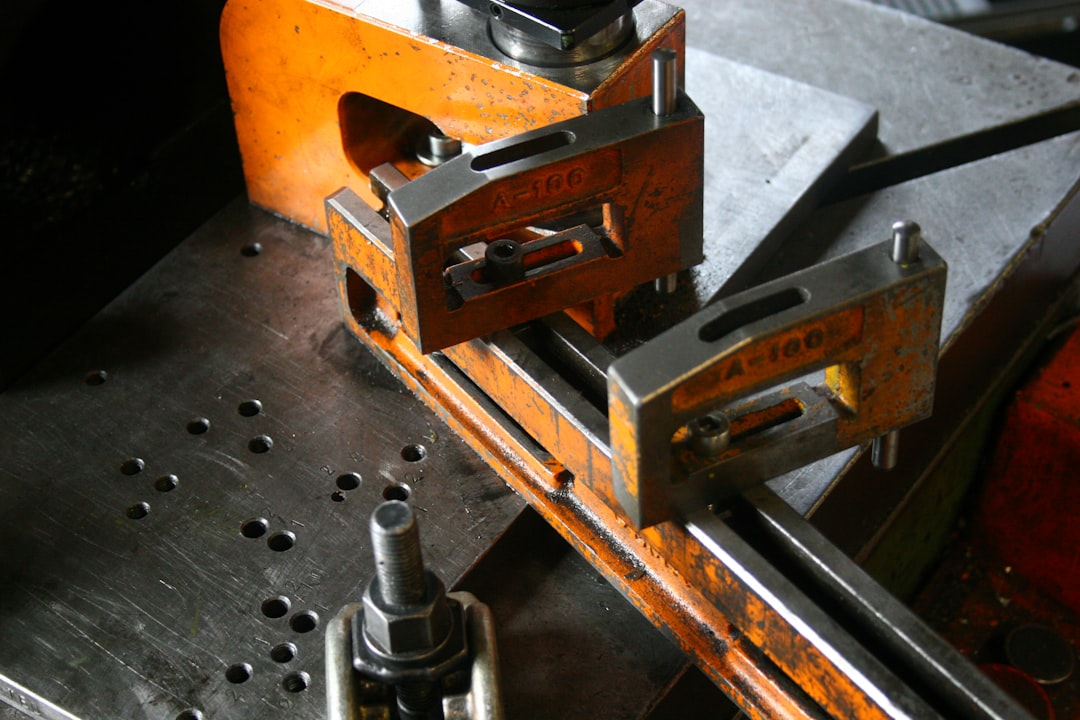
Manufacturing success is rarely decided by one dramatic breakthrough. More often, it is built through disciplined control over details that affect fit, function, consistency, and repeatability at every stage of production. That is where precision engineering becomes decisive. Whether a business produces industrial components, assemblies, or highly specified parts for demanding applications, the ability to achieve exact tolerances and dependable process control has a direct effect on quality, cost, delivery confidence, and customer trust.
The Foundation of Reliable Quality
At its core, precision engineering is about producing parts and systems that perform as intended, every time. In manufacturing, even small deviations can create large downstream problems. A component that is slightly out of tolerance may still appear acceptable in isolation, yet fail during assembly, reduce product life, or create inconsistency across batches. When these issues accumulate, manufacturers face rework, delayed shipments, warranty exposure, and damaged credibility.
Precision matters because it protects the integrity of the finished product. Accurate machining, controlled fabrication, robust inspection, and careful process management all contribute to the same result: parts that meet specification and behave predictably in real-world use. This is especially important in environments where products must integrate with other components, maintain alignment, or perform under repeated mechanical stress.
Quality also becomes easier to scale when precision is built into the process. A manufacturer that relies on heroic last-minute adjustments will struggle to maintain consistency as volumes increase. By contrast, a precision-led approach creates a stable production environment where measurements, tolerances, tooling, and quality checks work together instead of fighting one another.
| Manufacturing Area | Without Strong Precision Control | With Strong Precision Control |
|---|---|---|
| Part consistency | Variation between batches and more fit issues | Repeatable output and smoother assembly |
| Quality assurance | Higher inspection burden and reactive fixes | More predictable verification and fewer surprises |
| Production flow | Frequent stoppages, sorting, and rework | Steadier throughput and less disruption |
| Customer outcomes | Performance complaints and reduced confidence | Reliable products and stronger long-term trust |
Where Precision Engineering Protects Cost and Throughput
Many companies first think about precision in terms of technical excellence, but its commercial value is just as important. Precision engineering supports manufacturing success because it reduces waste in the broadest sense of the word. Waste is not only scrap material. It also includes machine downtime, operator intervention, troubleshooting, delayed assembly, returned goods, and inefficient use of labor.
When tolerances are properly defined and processes are capable of holding them, production becomes more stable. Parts move through the line with fewer corrections. Assemblies require less forcing or adjustment. Inspection becomes more meaningful because teams are verifying controlled output rather than sorting through avoidable variation. These gains often improve lead-time reliability as much as they improve quality.
There is also a strategic advantage. Businesses that operate in competitive sectors cannot afford repeated production friction. The more complex the product, the more costly small inaccuracies become. Precision engineering helps manufacturers protect margins not by cutting corners, but by reducing the hidden cost of inconsistency.
- Lower rework: Better dimensional control reduces the need to correct parts after production.
- Less scrap: Accurate processes help preserve material and labor value.
- Faster assembly: Well-made components fit together with fewer interruptions.
- Better scheduling: Stable output makes delivery planning more dependable.
- Stronger lifecycle performance: Products built correctly from the start are less likely to fail early.
Precision Starts Long Before Production
One of the most common misconceptions in manufacturing is that precision begins on the shop floor. In reality, it starts much earlier, with engineering decisions that shape manufacturability. Drawings, tolerances, material selection, finishing requirements, and inspection criteria all influence whether a product can be produced consistently and economically.
Overly loose specifications can create quality drift, while excessively tight tolerances can add cost without adding functional value. The strongest manufacturing outcomes usually come from balanced engineering judgment: understanding which dimensions are critical, which surfaces matter most, and where process capability should be concentrated. This is why collaboration between design, engineering, and production teams is so important.
Design for manufacturability is not about lowering standards. It is about aligning product intent with practical production reality. When manufacturers are involved early, they can help identify features that may complicate tooling, increase variation risk, or slow down throughput. That early alignment often prevents expensive revisions later.
- Clarify functional requirements: Identify which dimensions and characteristics truly affect performance.
- Review tolerance strategy: Tighten where necessary, but avoid unnecessary complexity.
- Assess materials and finishes: Consider how they affect machining, fabrication, and durability.
- Define inspection methods: Make sure quality checks reflect actual product requirements.
- Confirm production capability: Match design expectations with realistic process control.
Manufacturers that treat precision as a full-process discipline rather than a final inspection task are usually better positioned to improve both quality and efficiency.
Why the Right Manufacturing Partner Makes a Difference
Even the best product design can underperform if production capability is inconsistent. That is why choosing the right manufacturing partner is a critical part of precision-led success. A capable partner should offer more than machinery alone. It should bring engineering understanding, process discipline, quality systems, and the practical ability to deliver repeatable results over time.
For companies sourcing complex components or assemblies, working with a specialist in precision engineering can make it easier to align design intent, production capability, and long-term quality expectations.
In Thailand, EVERCON operates within this space by combining contract manufacturing with engineering expertise for customers that need dependable production standards and close attention to technical detail. That kind of support is valuable when businesses need a partner that can contribute not only to fabrication and machining, but also to planning, refinement, and consistent execution.
When evaluating a manufacturing partner, it helps to look beyond price alone. A lower quote can quickly lose its appeal if it leads to unstable quality, repeated revisions, or missed delivery commitments. Stronger long-term value usually comes from a supplier that understands tolerances, communicates clearly, documents processes well, and takes quality seriously from the start.
What to look for in a precision-focused manufacturer
- Clear engineering communication and willingness to review specifications in detail
- Demonstrated control over machining, fabrication, assembly, and inspection processes
- A practical quality mindset focused on prevention as well as detection
- Consistency in documentation, traceability, and change management
- Evidence of repeatability, not just isolated technical capability
How to Turn Precision Engineering into a Competitive Advantage
Precision engineering delivers the greatest value when it becomes part of how a manufacturer thinks, not just how it measures. That means building a culture that respects process discipline, understands critical tolerances, and treats repeatability as a business asset. Manufacturers that do this well are often better at controlling risk, maintaining customer confidence, and adapting to more complex product requirements over time.
A useful next step is to review where variability creates the most friction in your operation. In some businesses, the problem is dimensional inconsistency. In others, it is poor handoff between design and production, or weak inspection planning, or supplier capability that does not match the product’s demands. Precision engineering helps solve these issues because it creates a framework for making better decisions upstream and maintaining control downstream.
The manufacturers that stand out in demanding markets are usually the ones that understand a simple truth: precision is not a luxury reserved for exceptional parts. It is a practical discipline that shapes everyday performance. When products need to fit correctly, function reliably, and arrive with confidence, precision engineering becomes essential to manufacturing success. Businesses that invest in it are not merely improving process detail. They are strengthening quality, protecting margins, and building a more resilient production future.
——————-
Visit us for more details:
https://evercon.co.th
evercon.co.th

+66 (0) 95 541 7979
Evercon Group – Precision Contract Manufacturing and Engineering in Rayong, Thailand. We specialize in CNC Machining, Industrial Design, Fabrication, Prototyping, Assembly, Automation, and Electrical system integration, from concept to delivery.
